

|
|
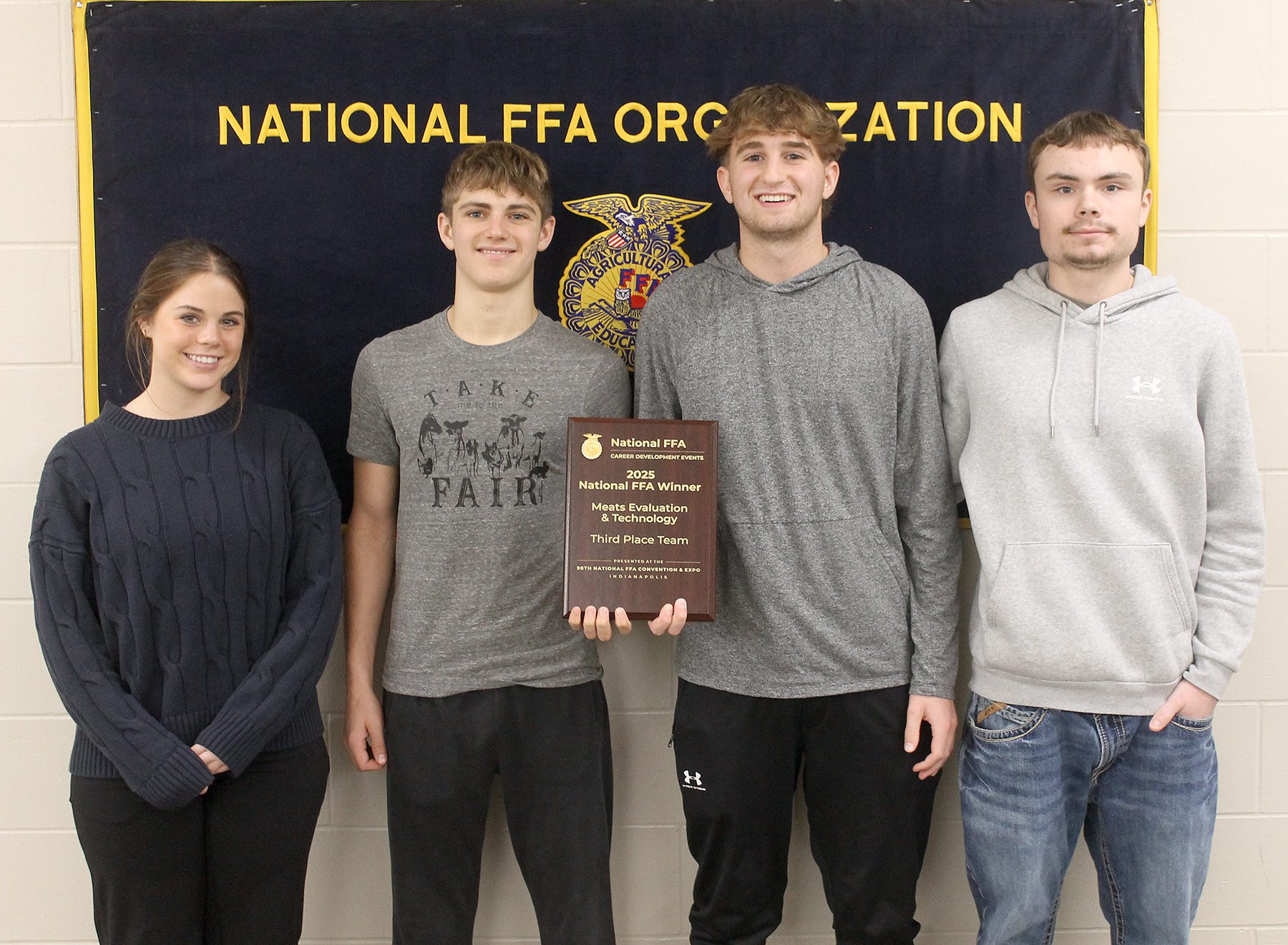
The Pipestone Area Schools meats judging team includes (l-to-r) Samantha Stokesbary, Mason Fruechte, Matt DeBates and Barrett Berkenpas. The team recently took third place at the National FFA Convention in Indianapolis. Photo by Kyle Kuphal
The Pipestone Area Schools (PAS) FFA meats judging team recently took third place from among 42 state champion teams from around the country at the National FFA Convention Oct. 29 to Nov. 1 in Indianapolis.
Those not involved in meats judging or FFA might not be familiar with what the activity involves, so the PAS team members took the time to sit down with the Pipestone County Star and describe their activity. The team includes Barrett Berkenpas, Samantha Stokesbary, Matt DeBates and Mason Fruechte. Fruechte is a junior and the rest are seniors.
Meats judging involves several components, including meat identification. A cut is placed on a table and the student must identify the species of meat (beef, pork or lamb), the wholesale cut (based on what part of the animal it’s from), the retail cut (such as steaks or roasts), and the recommended cookery method, which could include dry, moist or either. A T-bone steak, for example, would be cooked using a dry method such as on the grill, the students said.
Other parts of the contest include quality grading, which takes into account how tender and juicy a cut will be; yield grading, which considers the fat thickness and how much meat there is on the carcass; and placing classes.
“There’s usually four cuts of the same thing and then you rank them best to worst,” DeBates said of placing classes. That’s based on factors including the trimness, marbling and muscling of the cut.
The national contest also includes a test about topics including legislation, animal care, nutrition, meat safety, foodborne illnesses and more.
The students attributed their success at the multi-faceted contest largely to their coach.
“It’s all for Phil Berg,” Stokesbary said.
They said they also spent a significant amount of time practicing their craft. Their preparation included visiting meat plants and labs at colleges to look at carcasses, attending practice competitions, and reviewing pictures from previous contests.
The students said they joined the team because of Berg. Natalie Resch, agriculture science teacher and FFA advisor at PAS, said Berg typically calls the FFA advisors and asks who would be a good fit for the team. The advisors recommend students and the students and their parents are asked if they’re interested in joining the team.
Berg and PAS have a history of successful meats judging teams. Resch said three meats judging teams have made it to the national convention in her six years at PAS, thanks in large part to Berg.
This year’s team earned a trip to the national convention by taking first at the 2025 Minnesota State FFA Convention in April. In 2024, the team took second at the state convention and won first place at the Western National Roundup in Denver in January of 2025.
Another team of younger PAS students has already qualified to compete at the state convention in April of 2026. That team includes Finley Whipkey, Lane Fruechte, Maesa Folkerts and Kenley DeWilde, who are sophomores and freshmen.
For the typical, non-meats judging team member, this year’s third place in the nation team members offered some advice when selecting a cut of meat. They recommended buying lower fat content beef and darker colored pork, and they said that if the package says organic or grass fed, it probably just means more expensive.